

Success Stories
Zinc Recovery Furnace for Galvanizing Line
The Operational Challenge
A company with galvanizing lines contacted us due to a high rate of material waste in their processes. During our on-site evaluation visit, we detected that they were losing profitability due to the accumulation and poor handling of galvanizing surface dross. The client urgently needed a verifiable strategy for operating cost reduction and the utilization of their metallic scrap.
Engineering and Technical Solution from PTN
At Procesos Térmicos del Norte, we don't just provide equipment; we develop value engineering. We worked closely with the client to conduct a technical and economic feasibility study. The results indicated that the most efficient and profitable investment was implementing a zinc recovery furnace designed specifically to treat their dross. We manufactured and supplied the custom equipment, integrating the necessary control and combustion systems to guarantee maximum thermal efficiency.
The Result
The project's return on investment exceeded initial expectations. The client successfully recovered a high percentage of usable zinc, drastically reducing their raw material purchasing costs. The engineering solution was so successful, and their production increased to such an extent, that the client purchased a second recovery furnace from us to expand their installed capacity.
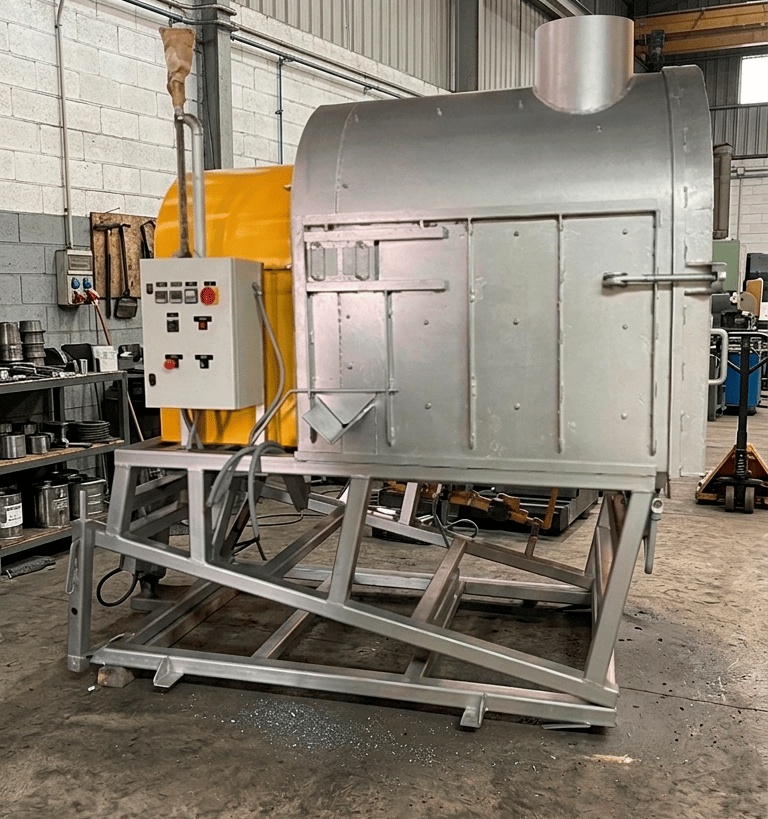
Zinc Recovery Furnace for Galvanizing Line
Burner Retrofitting in Combustion Systems for Industrial Furnaces
The Operational Challenge
A client faced a critical emergency at their plant: a complete shutdown of their production line due to the sudden failure of two burners in their industrial furnace. Upon evaluating the situation, we confirmed that the exact replacements had a long lead time. Keeping the line halted while waiting for the original equipment represented unacceptable economic losses due to downtime.
Engineering and Technical Solution from PTN
At Procesos Térmicos del Norte, we know that the industry in Saltillo and the surrounding region requires agile and functional solutions. To reactivate the process immediately, we designed a custom retrofitting strategy:
We supplied highly efficient alternative burners with immediate availability that met the thermal capacities required by the client's process.
To resolve the differences in design and mounting dimensions, we custom-manufactured the burner blocks (bases) for the new burners.
We cast these blocks using specialized high-strength castable refractory, guaranteeing a perfect fit and the necessary thermal insulation. The pre-delivery assembly is detailed in our Burner Success Stories Photograph.
The Result
The custom retrofitting was a total success. The structural dimensions of the castable refractory fit perfectly, allowing the client to install the equipment and resume their production line in record time. We proved that with the right technical assistance and the integration of refractory materials, it is possible to avoid weeks of downtime and keep industrial operations fully intact.
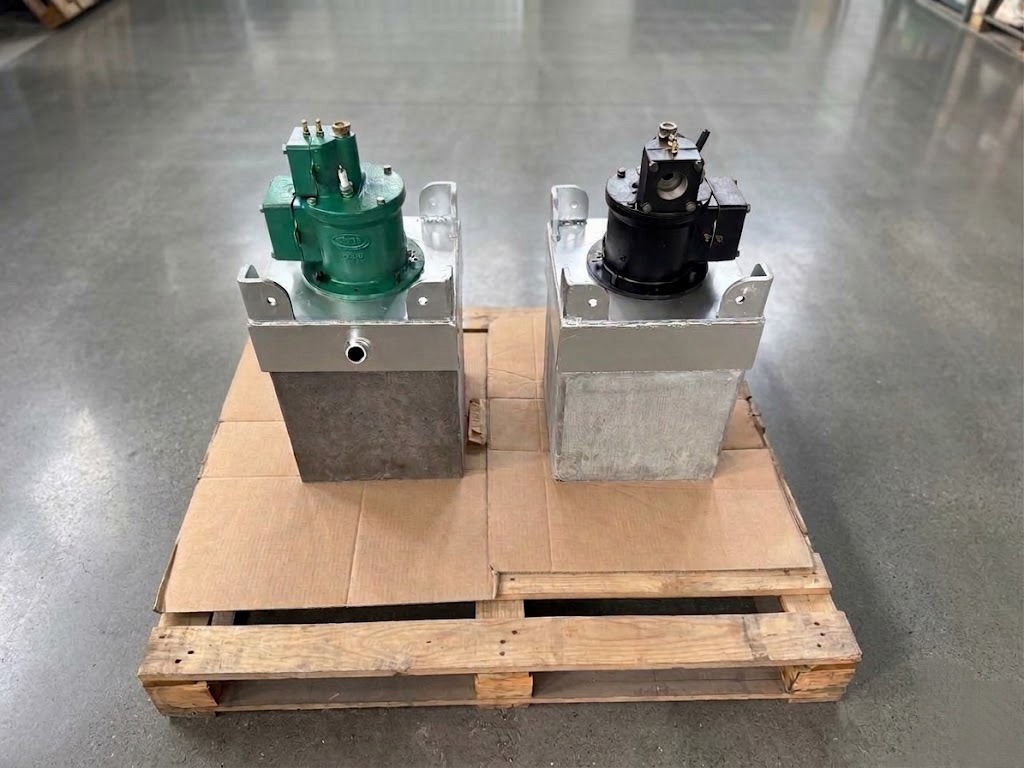
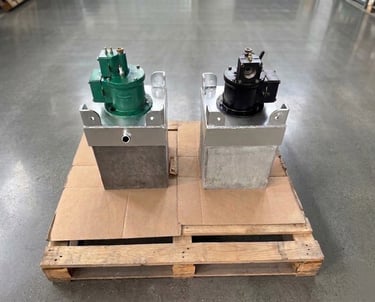
Emergency Retrofitting in Combustion Systems for Industrial Furnaces
Combustion Train and Thermal Control Modernization
The Operational Challenge
The client was operating with an obsolete combustion system that experienced recurring critical failures. The main challenges included severe difficulties during ignition cycles, a total lack of precision in controlling temperature stability, and a strong suspicion of excessive, uncontrolled LP/natural gas consumption due to the inefficiency of aging components.
Engineering and Technical Solution from PTN
We designed and executed a comprehensive re-engineering of the thermal system. We replaced the legacy supply line with a high-precision regulation and safety gas train, integrated efficient combustion blowers, and optimized the flame control instrumentation to ensure a perfect air-gas mixture.
The Result
Two years after completing the renovation, the system continues to operate flawlessly and continuously. Downtime losses from ignition failures were completely eliminated, exact thermal stability was achieved throughout the process, and the projected energy savings in fuel consumption were fully realized.
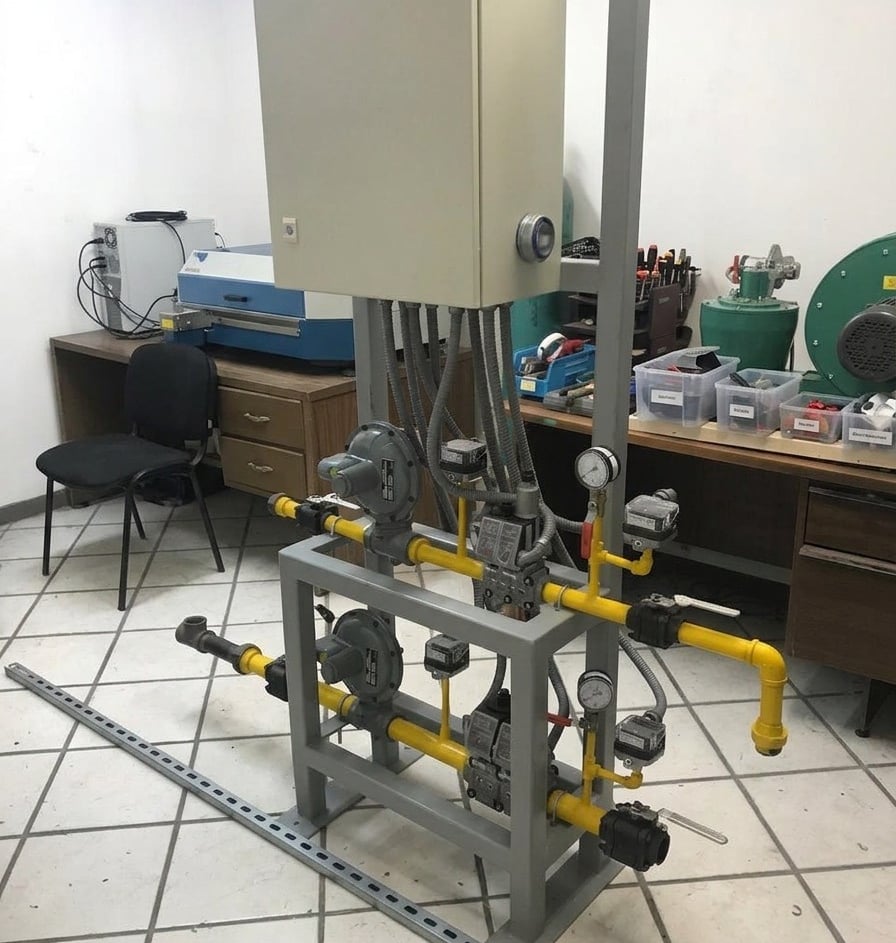
Combustion Train and Thermal Control Modernization
Contact
We are always here to help you. (Estamos aquí para ayudarte siempre.)
Phone: 844 415 0001
Phone: 844 767 7716
Email: [email protected]
About Us
Leaders in industrial thermal solutions since 1988. Quality, experience, and commitment to the industry of northern Mexico.
© 2025. All rights reserved.